Measure the shelf first, then give every spool a home you can seal between prints.
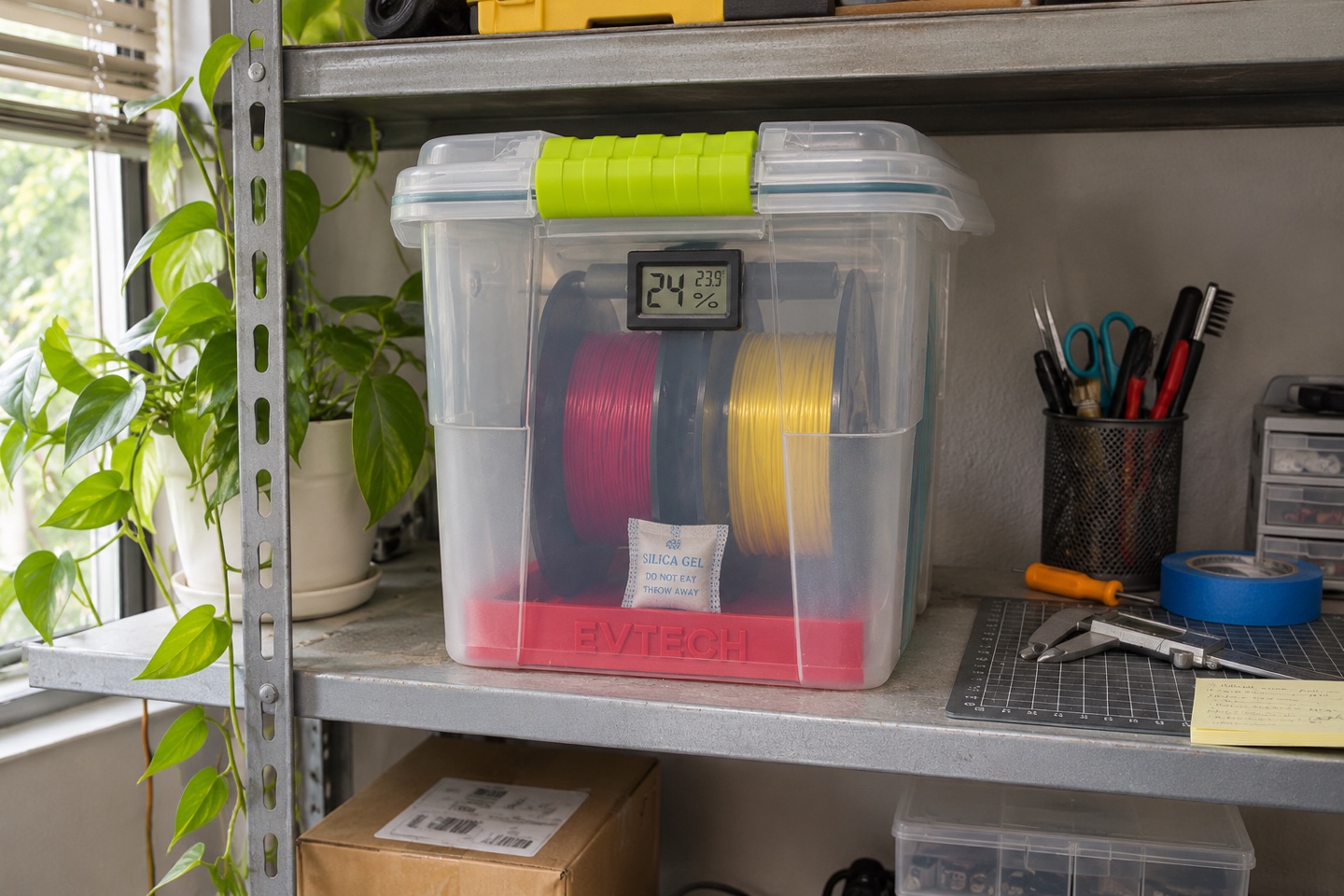
| Situation | First check | Next action |
|---|---|---|
| Freshly dried spool | Does the lid seal evenly? | Store sealed with desiccant and check the trend |
| Spool clicks or binds | Can it rotate with the lid latched? | Reposition spool, holder or feed tube |
| Likely damp filament | What does the material maker specify? | Use a suitable heated dryer and retest |
Measure the shelf and the lid clearance
Measure the shelf depth and height with the lid open. Check the bin’s inside dimensions, too. Many bins narrow at the bottom, right where upright spools need room.
Leave room for the humidity monitor
Put a small hygrometer where you can read it through the wall. Keep the desiccant in a vented container that stays clear of the filament. Check the humidity over time to see whether the seal or desiccant needs attention.
Dry damp material separately
A sealed bin helps keep dry filament dry. For filament that has already absorbed moisture, follow the filament maker’s drying temperature and timing with a suitable dryer.
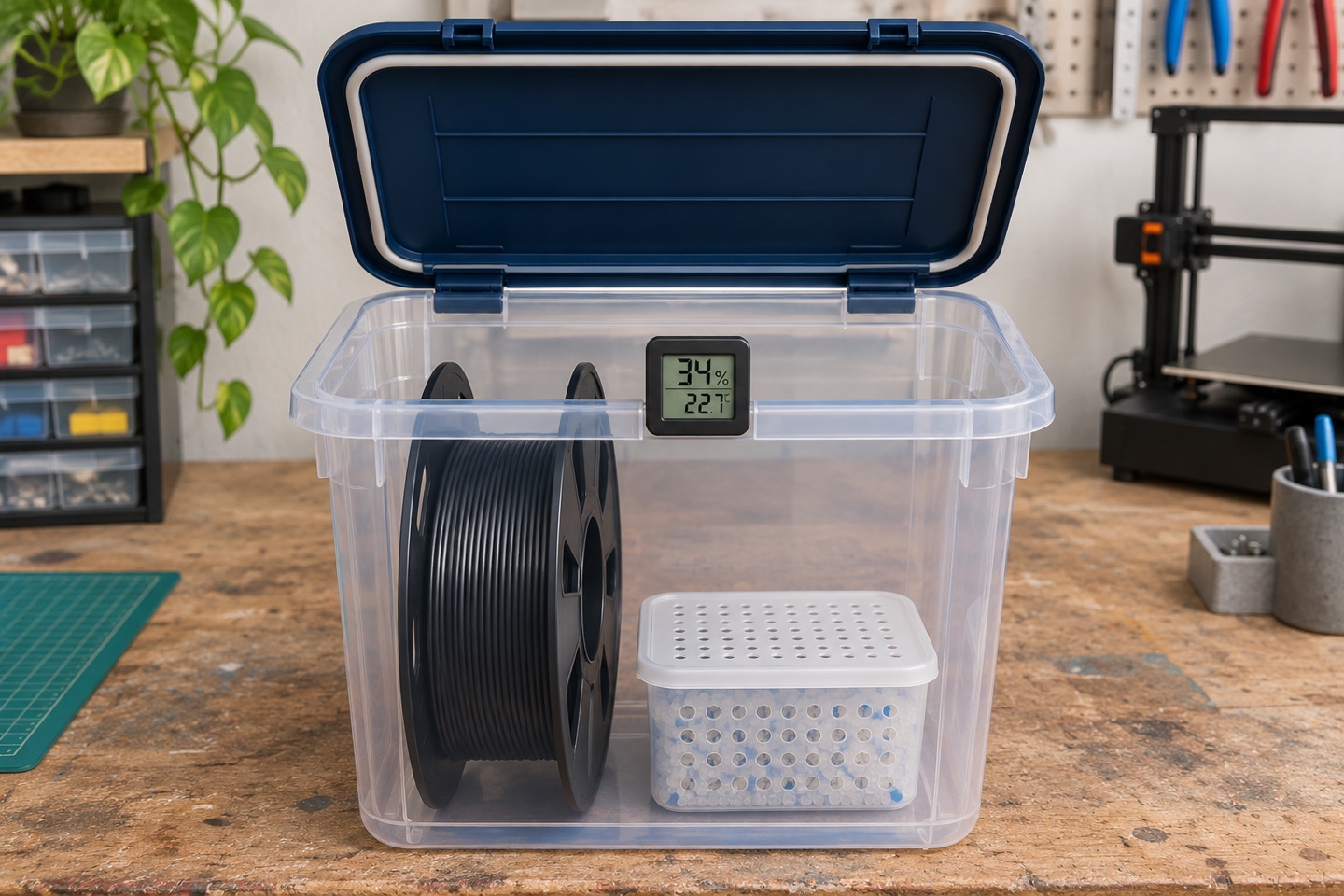
Plan a one-spool setup
Start with one gasketed container and stand the largest spool inside it before buying organizers. Set the humidity meter at spool height where you can see it without opening the lid. Keep the desiccant in a ventilated holder so it cannot spill into the filament path.
Check the seal over a day
Close the lid with dry filament inside and write down the humidity reading. Check again the next day with the box still shut. If the reading keeps climbing, inspect the gasket and latches, then check whether the desiccant needs replacing or recharging. For active drying, follow the temperature and time on the filament maker’s instructions.
Separate storage from drying
A hygrometer measures the air inside the enclosure. Use its trend to check the enclosure and desiccant. To see whether drying helped the filament, compare two short prints with the same g-code and conditions before and after drying to the material maker’s instructions.
Test the feed path with the lid latched
Before a long print, pull a short length through the exit and watch the spool turn. Check that the tube stays clear of the flanges and that the filament enters without rubbing. If you only need storage, keep the box sealed and transfer the spool when you print.
What to look for
Compare the model numbers and fit details before ordering. Product photos are from product catalogs and retailer listings.
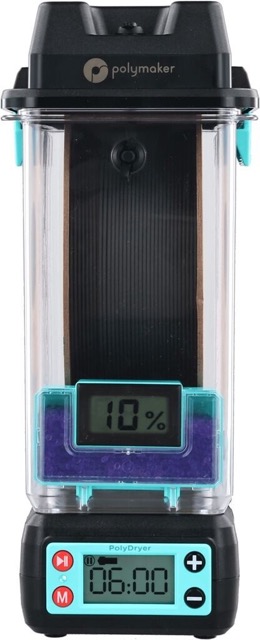
Polymaker PolyDryer
A modular commercial option if you want to store and actively dry filament. Check whether the selected listing includes the powered dock or only a storage box.
View on Amazon