Make sure the filament diameter, spool dimensions, and feed path work with your printer.
| Check | Measure or record | Decision |
|---|---|---|
| Fit | Filament diameter, spool width, flange diameter and hub | Compare with the named feeder and spool holder |
| Cost | Price and net filament weight | Divide price by kilograms of filament |
| First layer, corners, walls and stringing | Compare identical parts before changing the profile |
Start with filament diameter
Check the diameter listed in your printer manual. Then look for that measurement on the filament listing. A listing that says PLA still needs to tell you its diameter.
Measure the whole spool
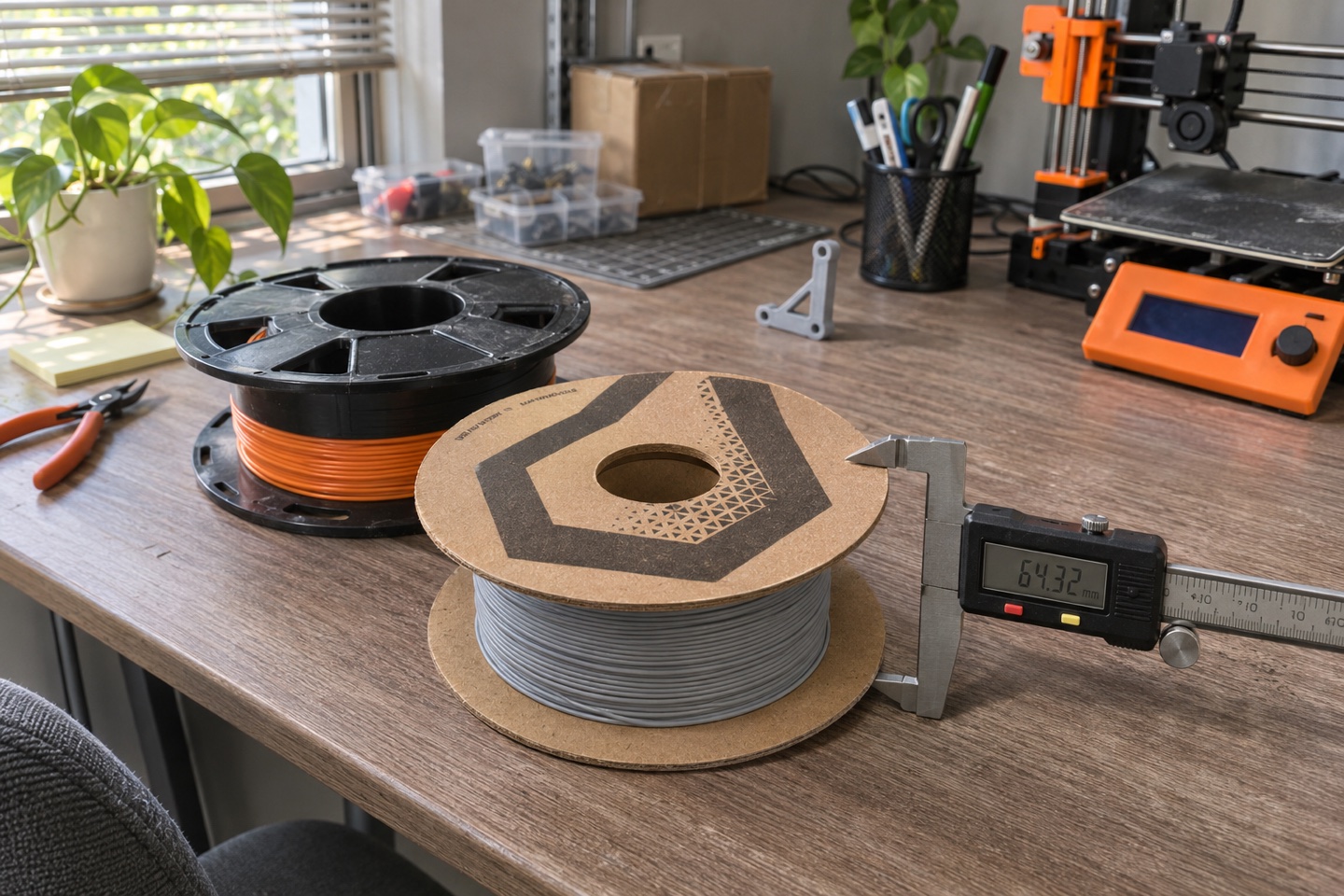
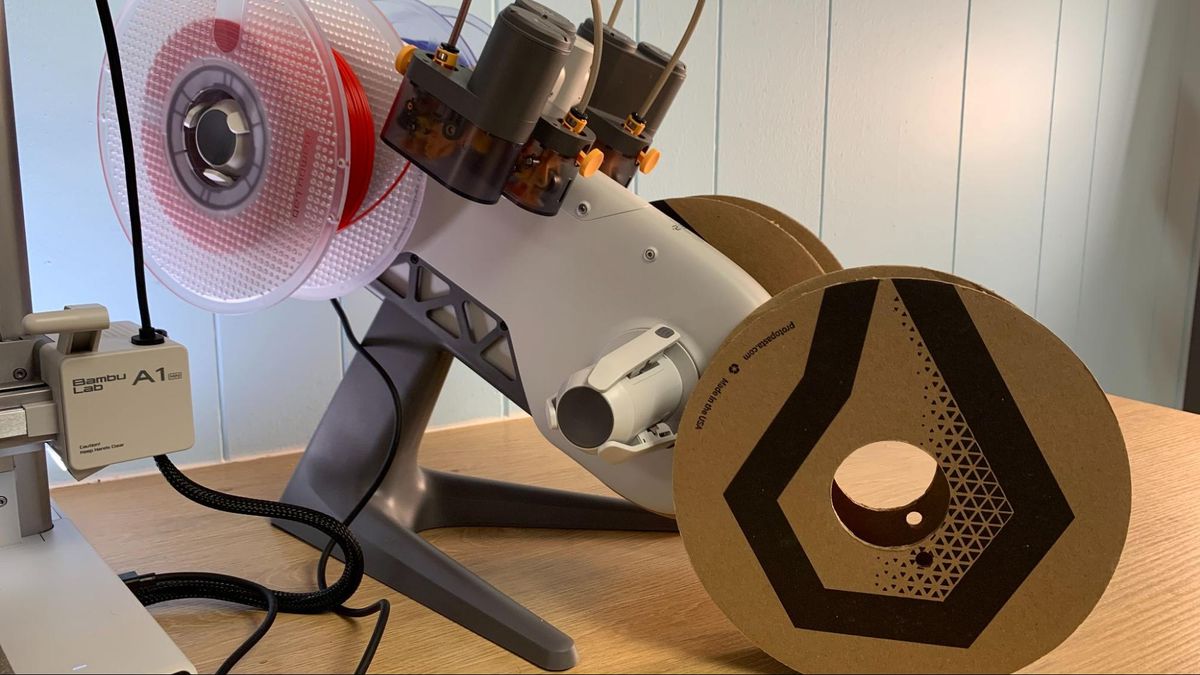
Check the outer diameter and width, including the flanges. For an enclosed feeder, compare all the dimensions and any spool material limits with the manufacturer’s approved range. A loose refill also needs a compatible reusable spool.
Follow the feed path
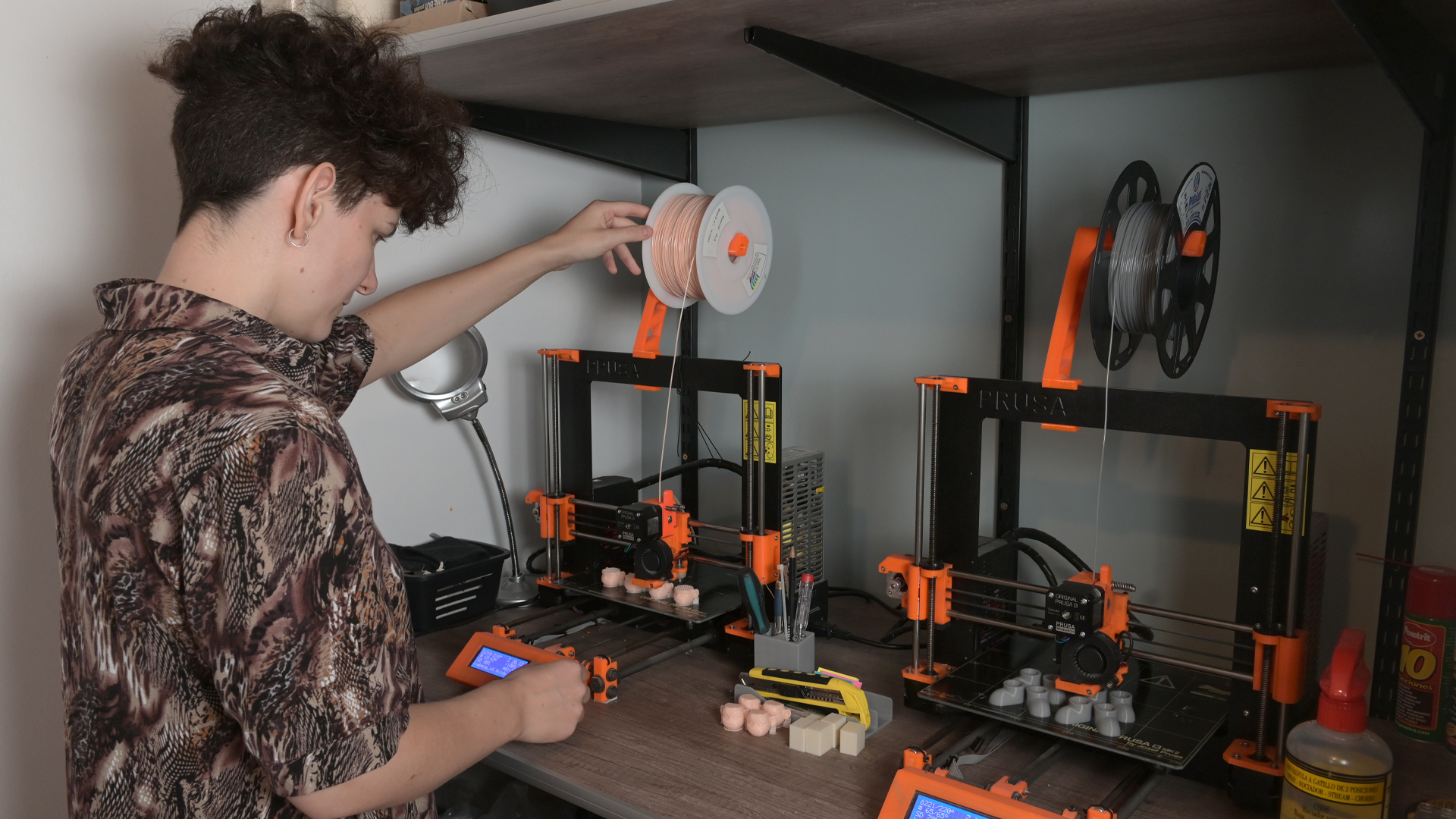
Check how the spool sits and how the filament enters the printer. Leave enough room for the spool to turn and for the filament to travel without a tight bend. When comparing multipacks, divide the price by the net weight of the filament.
Measure a spool you already use
Put a working spool flat on the table. Measure across the flange for its outside diameter, through the center for hub clearance, and between the outside faces for overall width. Compare those three numbers with the new spool and the feeder manual. The net weight shown on a listing describes the filament, so two 1 kg spools can still have different dimensions.
A simple price check
A $24 spool containing 1 kg costs $24 per kg. A $15 pack containing 500 g costs $30 per kg. For a refill, include the price of a compatible reusable spool if you do not already have one.
Compare spools on one printer
Print the same small bracket with each candidate spool. Keep the build plate, layer height, model orientation and slicer profile fixed for the first pass. Record the exact printer, color, material, temperatures and print time. Check underside adhesion, corner lift and strands between features under the same light.
Give a failed spool a second pass
If a sample performs poorly at baseline, change one setting at a time within the filament maker’s guidance. Record the original and tuned results separately. A baseline comparison measures convenience with that profile. A tuned comparison tells you what the material can do with more setup.
What to look for
Compare the model numbers and fit details before ordering. Product photos are from product catalogs and retailer listings.
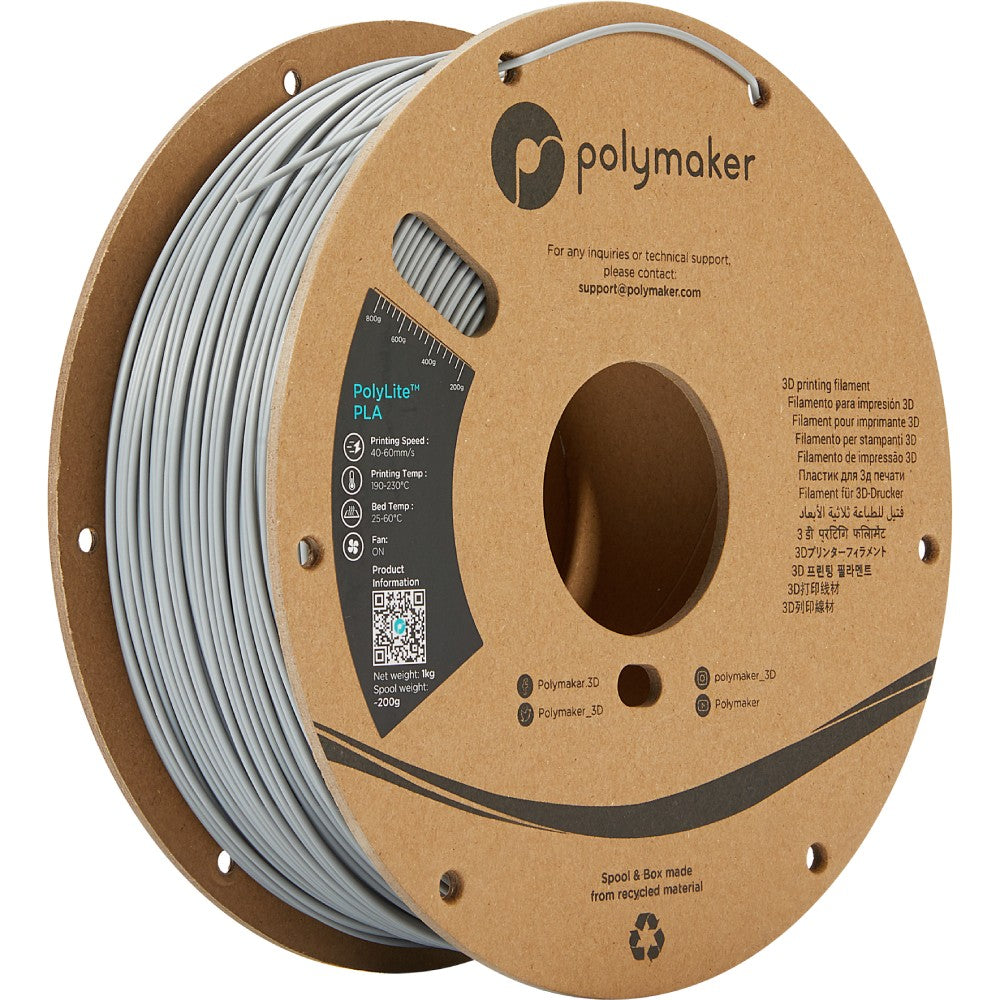
Polymaker PolyLite PLA, Gray, 1.75 mm, 1 kg
A starting point for standard PLA. Choose the filament diameter listed in your printer manual and confirm the dimensions of the exact spool before ordering.
View on Amazon